In This Issue:
- National Diabetes Month & Preventing Diabetes-Related Health Issues
- Daylight Saving (Nov. 1st)
- Potential Side Effects & Vitamin D
- National French Toast Day (Nov. 28th) Try our Recipe!
Fall Back!
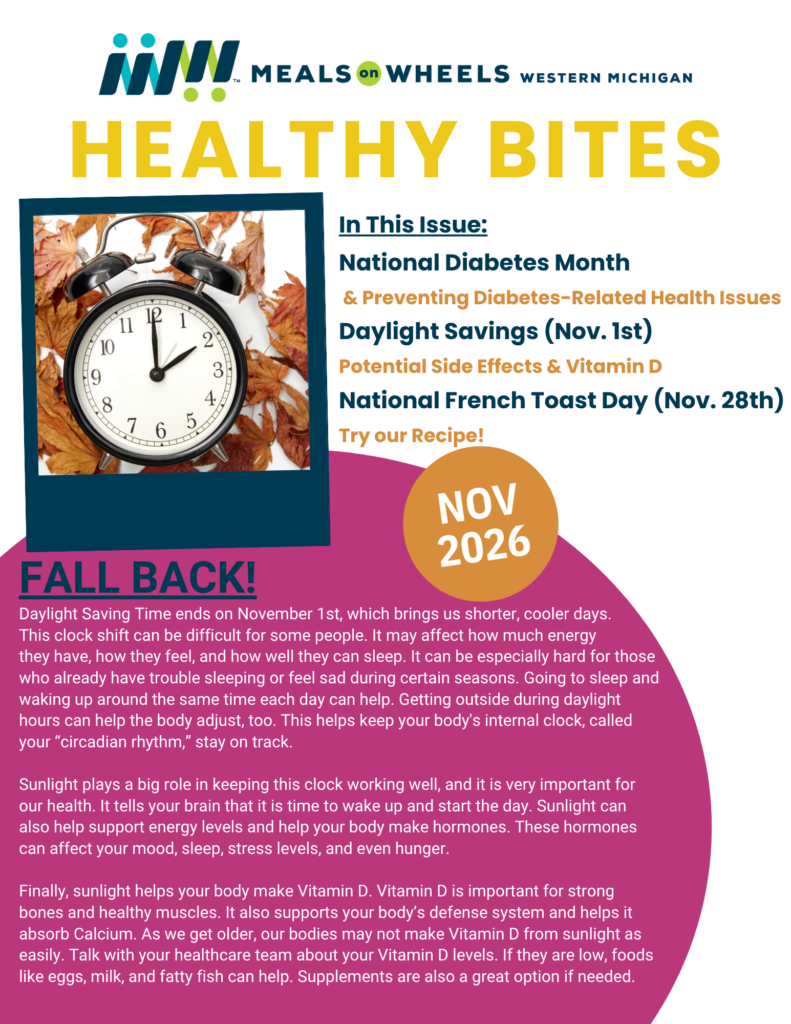
Daylight Saving Time ends on November 1st, which brings us shorter, cooler days. This clock shift can be difficult for some people. It may affect how much energy
they have, how they feel, and how well they can sleep. It can be especially hard for those who already have trouble sleeping or feel sad during certain seasons. Going to sleep and waking up around the same time each day can help. Getting outside during daylight hours can help the body adjust, too. This helps keep your body’s internal clock, called your “circadian rhythm,” stay on track.
Sunlight plays a big role in keeping this clock working well, and it is very important for our health. It tells your brain that it is time to wake up and start the day. Sunlight can also help support energy levels and help your body make hormones. These hormones can affect your mood, sleep, stress levels, and even hunger.
Finally, sunlight helps your body make Vitamin D. Vitamin D is important for strong bones and healthy muscles. It also supports your body’s defense system and helps it absorb Calcium. As we get older, our bodies may not make Vitamin D from sunlight as easily. Talk with your healthcare team about your Vitamin D levels. If they are low, foods like eggs, milk, and fatty fish can help. Supplements are also a great option if needed.
Spotlight On: National Diabetes Month
This month is American Diabetes Month ® , a time to learn more about diabetes. Today, about one in two Americans has diabetes or prediabetes. According to the National Institute of Health (NIH), diabetes is defined as “a disease that occurs when your blood glucose, called blood sugar, is too high. When it’s not managed, diabetes can damage the eyes, kidneys, nerves, and heart, and is linked to some types of cancer.”
Prediabetes means your blood sugar is higher than normal, but not high enough to be called diabetes. The good news is that prediabetes can often be reversed with healthy habits. Diabetes, however, is a chronic condition that requires lifelong management. People with diabetes need to take care of it every day in order to stay healthy. Here are some important tips from the NIH’s National Institute of Diabetes and Digestive and Kidney Disease for preventing or managing diabetes:
- Knowledge is Power. Know your own risk for developing diabetes. You may be more likely to get diabetes if you:
- Are 35 years old or older
- Have family members with diabetes
- Are African American, American Indian, Asian American, Hispanic, Latino, or Pacific Islander
- Do not get much physical activity
- Have extra body weight
- Manage your ABC’s. Prevention or management of the condition soon after diagnosis may help prevent diabetes-related health problems. Always make sure that you know the three values of your ABC’s, which are:
A. A1c | B. Blood Pressure | C. Cholesterol
- An A1C test shows your average blood sugar level over the past few months. This is usually around three months or so. High blood sugar can also affect your blood pressure and cholesterol. Keeping these numbers at healthy levels can lower risk of diabetes-related complications. Ask your healthcare team about what this looks like for you.
- Take it easy. Stress can make your blood sugar go up. It can also make it harder to eat healthy foods, exercise, sleep well, and take medications. Try to handle stress in healthy ways, like talking with someone you trust, taking a walk, or doing something you enjoy. If stress feels too hard to manage, ask for help.
- Slow & Steady. Making healthy changes to your eating, exercise, sleep, and stress habits is important but you do not have to change everything all at once! Start with small steps. For example, plan out dinners for the week or set aside time to be active. Try going to bed just a bit earlier each night. Small changes will grow into healthier habits over time.
- Take Medications. It is very important that you continue to take your medications and take them on time. Set alarms or ask a family member or friend to help remind you. Always talk to your doctor or pharmacist if you are having trouble managing medications, notice new side effects, or want to make any changes to how you take them.
Giving Thanks
Thanksgiving allows us an opportunity to really appreciate what matters to us. What are you grateful for this holiday season? Take a moment and use this space to reflect on people, places, and things that you are grateful for. Write about or draw them in these “gratitude jars” here!
Baked French Toast
Prep Time: 15 min | Cook Time: 15 min | Total Time: Varies | Serving Size: 8 (1/2 cup servings)
Celebrate National French Toast Day on November 28th with this simple Oven Baked French Toast Recipe. Alternatively, give our delicious French Toast Meal (#71) a try!
Ingredients
- 8 slices of whole grain bread
- 5 large eggs
- 2 Tbsp of milk of choice
- (dairy free option: almond milk)
- Ground cinnamon or nutmeg (to taste)
Optional: Top with maple syrup, honey, jam, greek yogurt, applesauce, pumpkin puree, fresh or dried fruits, nuts, or seeds.
Recipe Adapted From: Mix & Match Mama
Directions
- Preheat oven to 350°F. Grab a nonstick baking sheet or line one with parchment paper to prevent sticking.
- In a medium mixing bowl, whisk together eggs and milk.
- Dip each bread slice into the mixture until soaked.
- Repeat until all slices are done and placed onto the sheet.
- Season toasts with desired spices like cinnamon, to taste.
- Place sheet into the oven and bake at 350°F for about 10 minutes. Time may vary slightly per oven.
- Flip toasts and bake for an additional 3-5 minutes.
- Serve, top, & enjoy!